What Causes Sprinkler Heads to Fail?
Most sprinkler head problems come down to a handful of causes. Knowing what you're looking at helps, but we diagnose on the spot so you don't have to guess.
Lawn Mower Damage
The most common cause of broken heads on residential properties in Boise and Meridian. Heads get clipped by mower blades, crack at the body, or shear off completely. A cracked head that still sprays isn't fixed, it's leaking water underground and will fail completely soon.
Sunken Heads
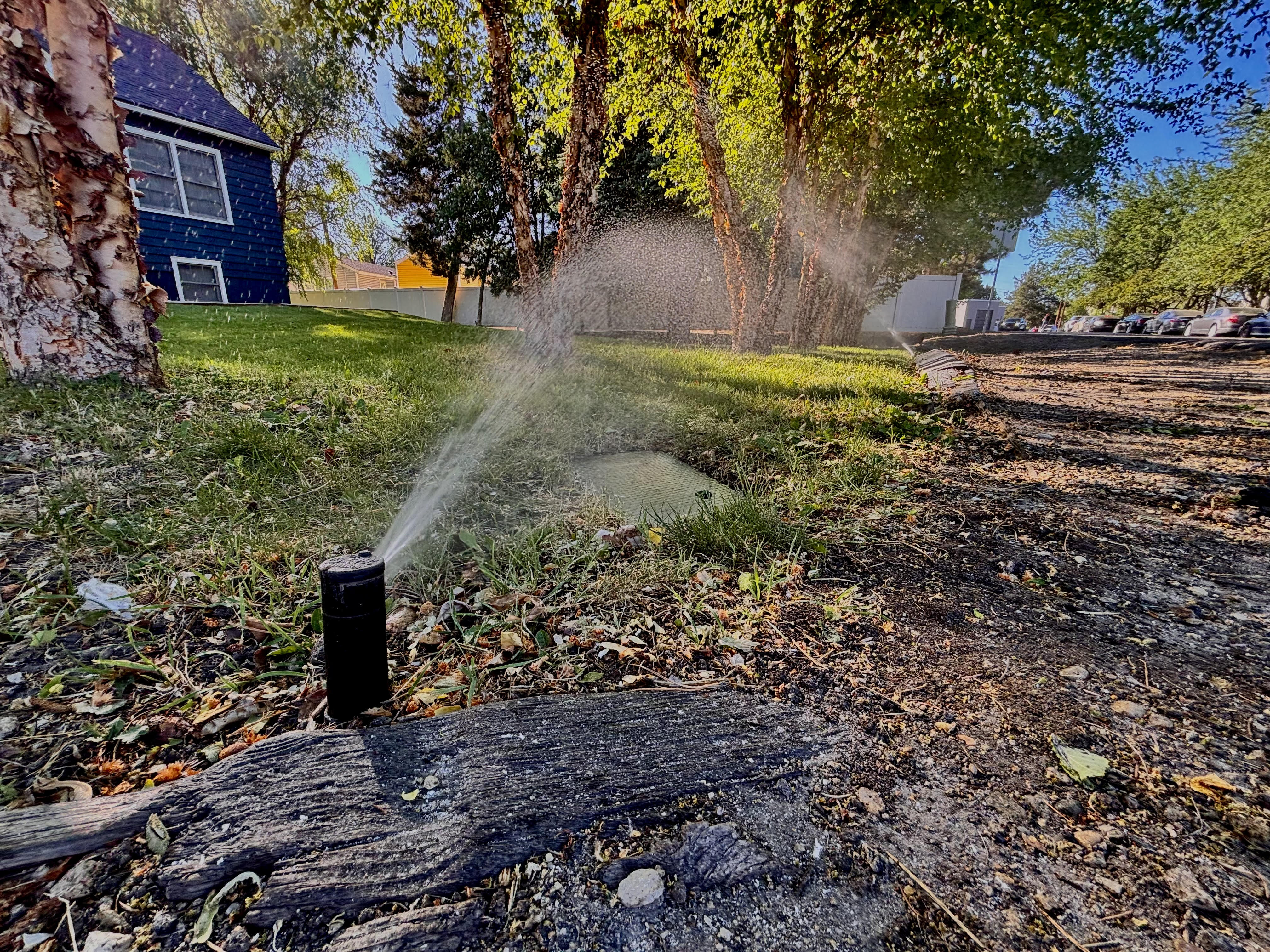
 Over time, heads sink below grade, especially in the clay-heavy soils common in Nampa and Caldwell. When a head drops too low, the spray pattern hits the ground a few inches from the head instead of reaching the lawn. The result is a soggy circle around the head and a dry brown patch where coverage used to land. We lift sunken heads and set them on a new riser or swing joint so they sit at the correct height.
Clogged Nozzles
Hard water deposits and debris from pressure irrigation and canal water systems plug nozzles and reduce output. This is especially common in Nampa and Caldwell, where canal sediment works its way through the system during the irrigation season. A clogged nozzle leaves dry spots that look like the system isn't running but the zone is actually operating fine, just not delivering water where it needs to go.
Freeze Damage
Heads that weren't fully blown out in the fall crack over winter when residual water expands. We see this every spring in Nampa, Kuna, and Caldwell. A proper spring turn-on catches freeze damage before you've watered dead zones all of May without realizing it.
Root Intrusion
Mature trees and shrubs in Boise's North End and older Meridian neighborhoods push up heads or grow around them, blocking coverage arcs and sometimes physically displacing the head from its original position. When a root is the problem, we reposition the head and install a swing joint that gives the lateral line some flex.
Wrong Arc or Radius Settings
Builder-installed systems in Kuna, Star, and newer Meridian subdivisions. Bridgetower, Paramount, Tuscany, are frequently done fast to hit a construction deadline. Arc settings get left at factory defaults, radius is never dialed in for the specific lot, and half the zones have coverage gaps from day one. If you moved into a new home in the last five years and have dry spots, there's a good chance this is the problem, not a broken head.
Services We Provide
Broken Head Replacement
Cracked, sheared, or missing heads replaced with matching rotors or spray heads. We carry common models on the truck.
Sunken Head Repair
Heads that have dropped below grade lifted and reset on a new riser or swing joint at the correct height for your turf.
Nozzle Replacement
Clogged or mismatched nozzles swapped out to restore correct precipitation rate and coverage pattern.
Head Adjustment
Arc, radius, and direction adjusted to eliminate dry spots and stop overspray onto sidewalks, driveways, and hardscapes.
Coverage Zone Audit
Full zone walkthrough to identify every head that's underperforming, not just the obvious broken ones.
Head Upgrade
Old fixed-spray heads upgraded to high-efficiency rotary nozzles (Hunter MP Rotator, Rain Bird R-VAN) for better coverage and water savings.
Common Sprinkler Head Issues by Area
Boise
Established yards on the Bench and North End have older Rainbird and Toro rotors, some 20 or 30 years old. Mower damage is constant in these neighborhoods because the turf is well-established and mowed frequently. Mature trees along Harrison Boulevard and in Hyde Park push up heads and block coverage. Foothills properties have elevation changes that affect pressure, meaning some zones need pressure-compensating heads to work correctly.
Meridian
Builder-installed systems in Bridgetower, Paramount, and Tuscany have head spacing and arc settings that were never dialed in for the actual lot. Hard water deposits from Meridian's municipal supply clog nozzles faster than most homeowners expect. A lot of Meridian service calls that come in as "dead spots" turn out to be clogged nozzles or heads aimed at the wrong target, not broken heads at all.
Nampa
Pressure irrigation in Nampa causes oversaturation in some zones and dead spots in others depending on how the system was originally balanced. Canal sediment clogs spray nozzles on older systems regularly, especially early in the season when the canals first open. Freeze damage in the spring is common. Nampa properties tend to have more heads that weren't fully drained during winterization.
Caldwell
Older systems in Caldwell have original heads from the 1980s and 1990s. Many are discontinued models that can still be matched with current equivalents, but some require a different riser height or body size. Large Caldwell lots often have zones with long-throw requirements, if the wrong head type was installed or the radius was set wrong, you'll have consistent dry spots in the middle of large turf areas.
Eagle
High-end landscaping in Eagle frequently mixes rotor zones, spray zones, and drip all on the same property. HOA systems require specific coverage patterns so turf areas meet community standards. Estate lots with large lawns and custom head spacing need careful matching when individual heads are replaced, using the wrong model throws off the entire zone's coverage balance.
Kuna and Star
New construction in Kuna and Star has the same builder-install problems as newer Meridian, coverage gaps, shallow head placement, and arc settings that were never set for the actual property. Landscaping work after move-in also frequently damages shallow heads. If your Kuna or Star home is less than five years old and you have dry spots, the issue is almost always arc settings or head positioning, not a broken component.
Rotor vs. Spray Head
Rotors spin and throw water in an arc over longer distances, typically 15 to 45 feet depending on the model and pressure. They're the right choice for large turf areas and are the most common head type on Treasure Valley residential systems. When a rotor fails it usually either stops rotating and sprays in one fixed direction, or the body cracks and water sprays at the wrong angle entirely.
Spray heads pop up and spray in a fixed pattern determined by the installed nozzle. No moving parts. Used for smaller areas, narrow strips, and landscape beds. Shorter radius, higher precipitation rate than rotors. Clogged nozzles and cracked bodies are the most common failures.
We match replacement heads to what's already in your system, or upgrade where it makes sense. Switching a fixed spray zone to rotary nozzles (Hunter MP Rotator or Rain Bird R-VAN) is worth considering on zones that have runoff problems or overspray onto hardscapes.
Need Heads Replaced?
We carry common rotors and spray heads on the truck. Most replacements done same visit.
Request Service Online 📞 Call or Text (208) 880-2712Licensed and Insured
Idaho Registered Contractor
Liability Coverage on Every Job

Related Services
Contact
- 📞 (208) 880-2712
- beelinesprinklerrepair@gmail.com
- Serving all 8 Treasure Valley Cities