Big Wet Spot in the Yard, What’s Causing It
A wet or soggy area that appears or grows worse each time your irrigation system runs is almost always caused by a broken underground lateral line. Water is escaping the damaged pipe below the surface and saturating the soil from below, which is why the area stays soft and wet even during dry stretches between rain events. The longer a broken line goes unrepaired, the larger the saturated area grows and the more damage it causes to turf, soil structure, and anything built near it.
Across the Treasure Valley, broken lateral lines are one of the most common irrigation service calls from May through September. Clay soil in Nampa, Caldwell, and Kuna shifts significantly during freeze-thaw cycles, which cracks PVC pipe and pulls apart push-fit couplings. Tree root intrusion is a leading cause in older Boise neighborhoods and in Eagle near established landscaping. And standard pipe aging, most residential irrigation systems use Schedule 40 or thin-wall PVC that becomes brittle after 15 to 20 years, causes failures in systems that have never had any other problems.
A broken line is not a DIY repair in most cases. It requires locating the break without excessive excavation, exposing the damaged section, splicing in new pipe with the correct fittings, pressure testing before backfill, and compacting the soil properly so it does not settle unevenly after the repair.
How to Recognize a Broken Line
The most reliable indicator is timing. If the soggy area appears or gets noticeably worse immediately after an irrigation cycle runs, the source is underground water from your system. Other signs include one zone with significantly less pressure than the others (the break is bleeding off pressure before it reaches all the heads), soft or spongy ground that does not dry out between cycles, or visible water pooling at the surface when a zone runs.
- Persistently wet or soggy area that worsens during irrigation runs
- One zone with noticeably less pressure than the others
- Soft, spongy, or sunken ground near a tree, fence line, or driveway
- Water pooling at the surface when the affected zone runs
- Water meter showing movement when all zones are supposed to be off
- Muddy or saturated soil around or inside a valve box
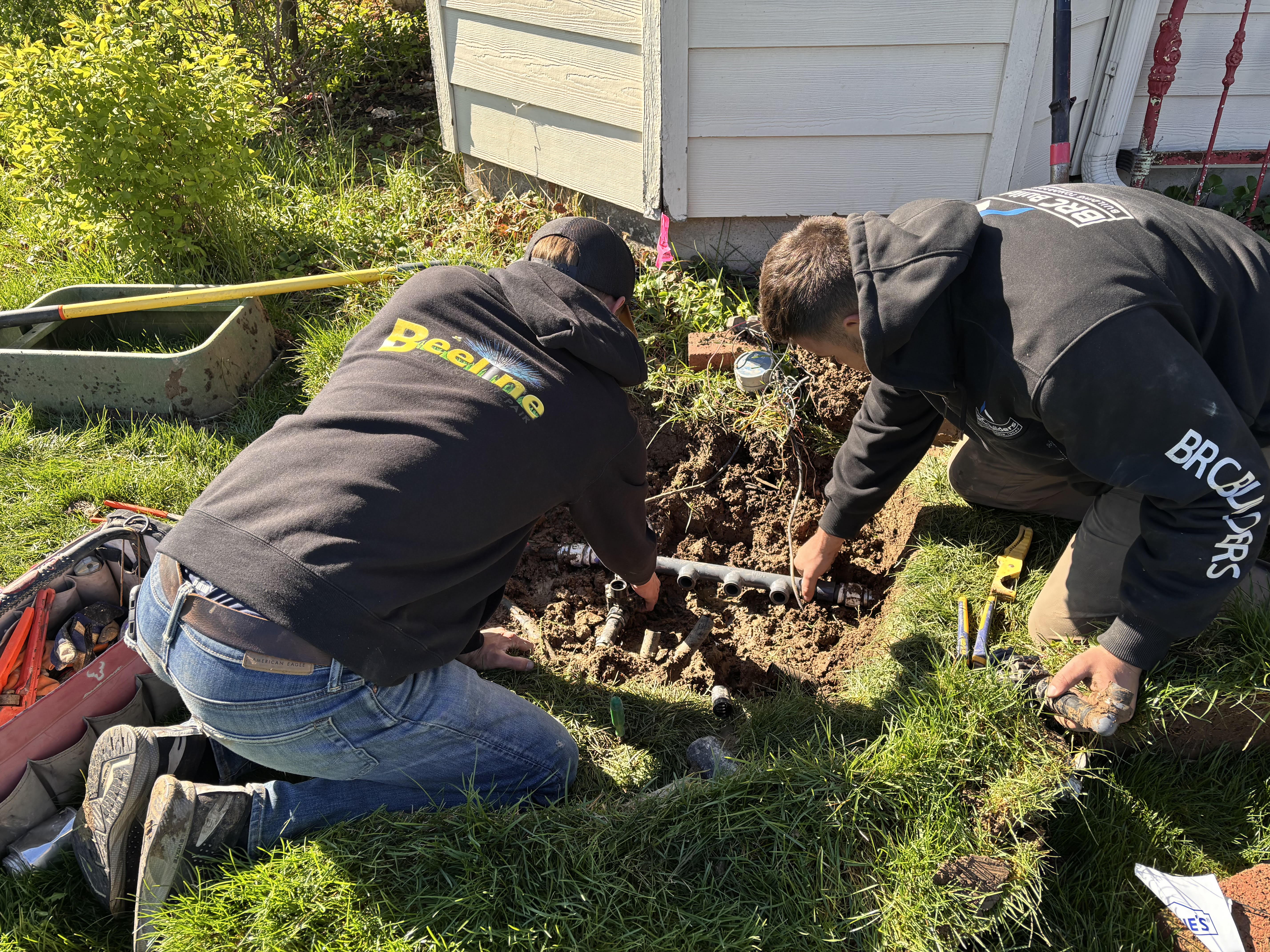
Line repair at a Caldwell property, broken lateral lines are one of the most common irrigation calls in the Treasure Valley.
Why Lines Break
PVC lateral lines are durable but not immune to damage. The leading causes in the Treasure Valley are ground movement from freeze-thaw cycles (which cracks pipe and pulls apart joints), tree root intrusion (roots follow the moisture gradient from your irrigation lines and eventually crack fittings or crush flexible line), and mechanical damage from digging, a shovel, edger, or aerator hitting a line during yard work. Normal aging also plays a role: PVC becomes more brittle over time, and a line installed in the 1990s or early 2000s may fail with no external cause at all.
Joints and fittings are the most vulnerable points. Push-fit couplings and compression fittings are more likely to pull apart under soil movement than solvent-welded PVC-to-PVC connections. Where tree roots are involved, the damage often extends along a section of pipe rather than at a single point, which means a longer replacement rather than a simple patch.
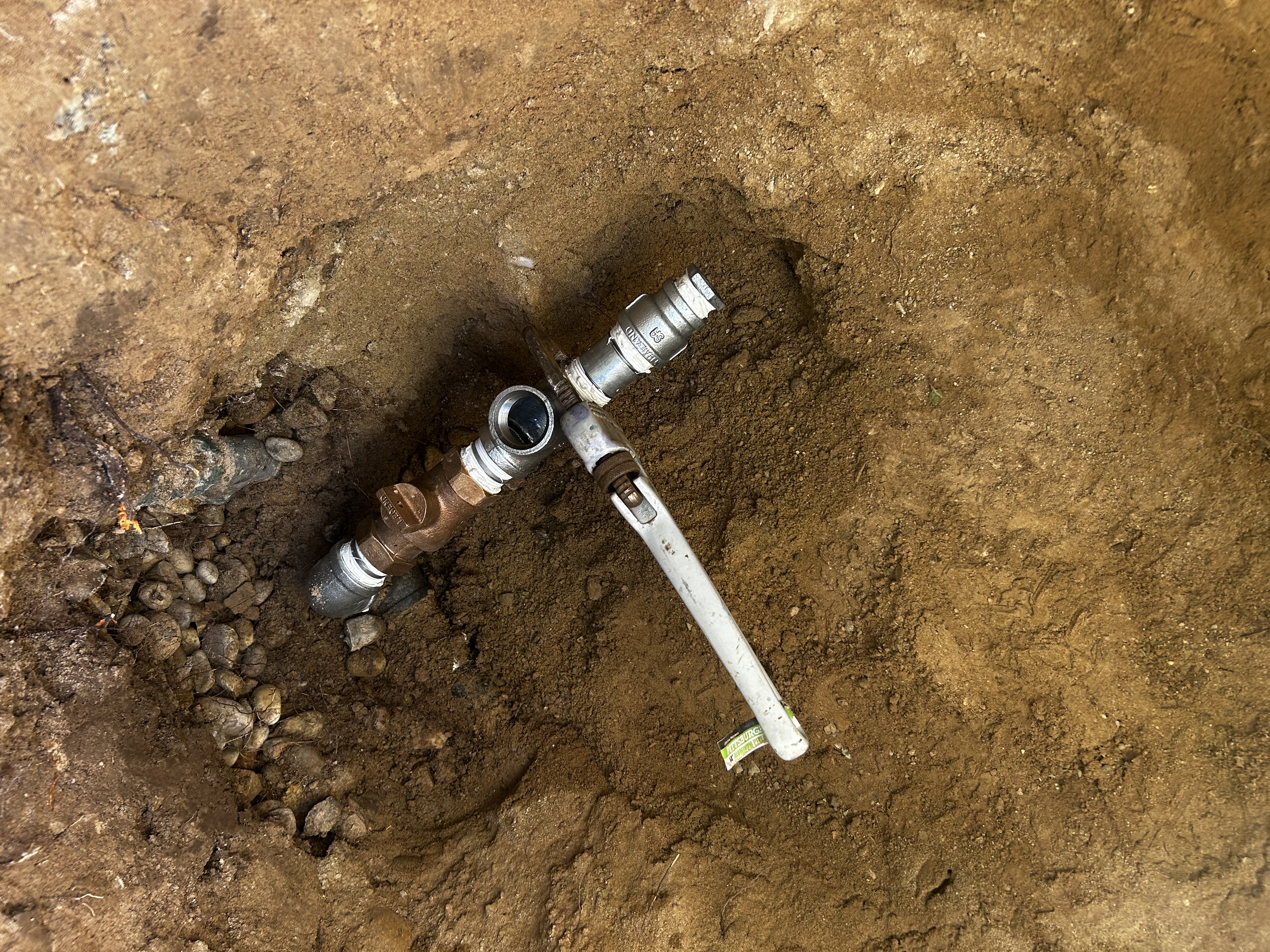
Main line installation in Meridian, when tree roots or ground movement cause repeated failures, full line replacement is the right call.
What Beeline Does
We start by running each zone manually while watching for pressure differences and surface saturation patterns. The shape and location of the wet area, combined with which zone makes it worse, usually lets us narrow the break to a specific section of line before any digging starts. We then do a careful hand probe to confirm the depth and location of the break, minimizing excavation to what is actually needed. Once the break is exposed, we repair or replace the damaged section using solvent-welded couplings that will outlast push-fit connections, pressure test the repaired zone before closing the trench, and backfill and tamp down the soil properly.
Most broken line repairs are completed in a single visit. We give you a clear cost estimate before any digging begins and we walk you through what was found and what was done before we leave.
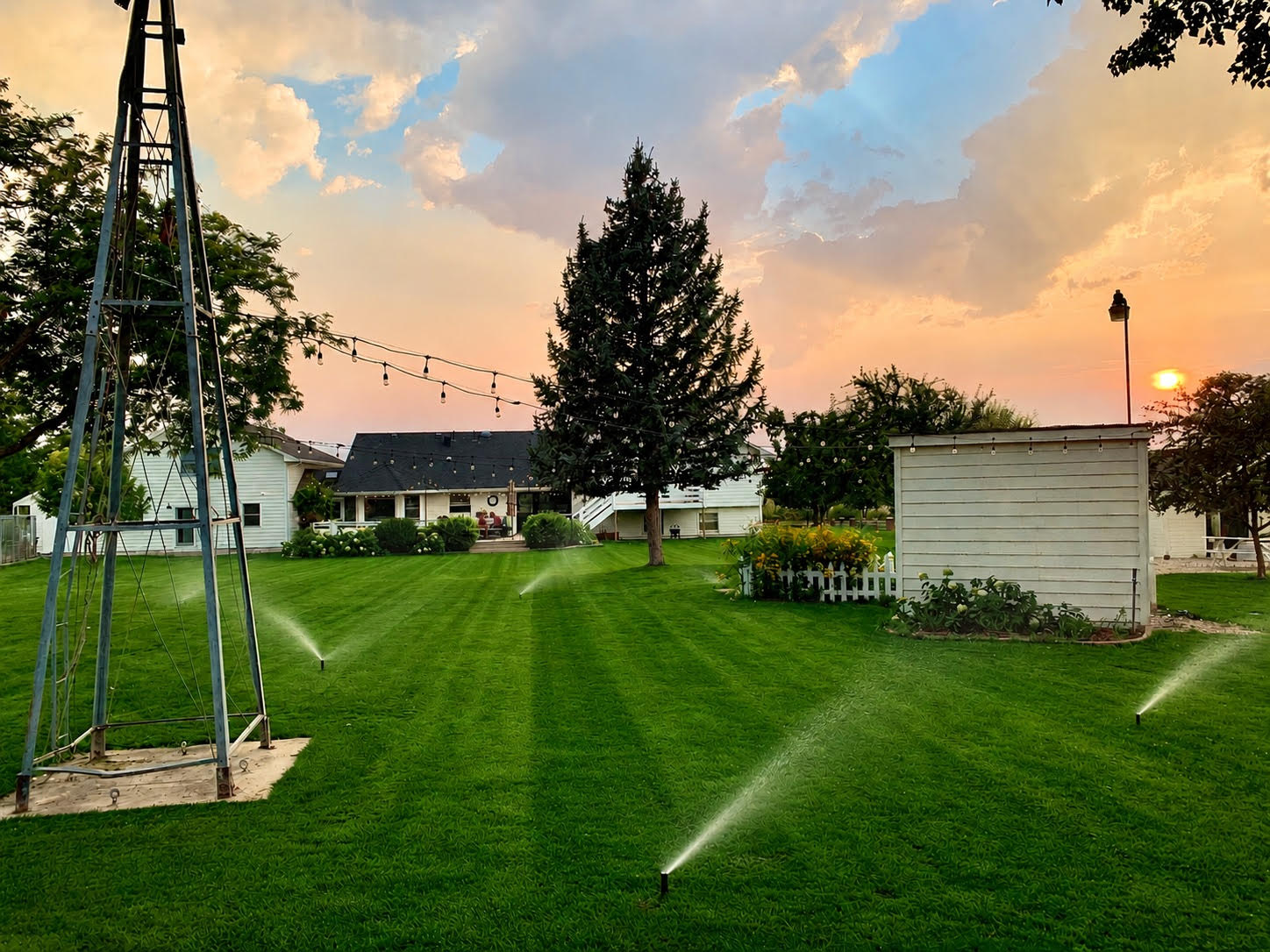
Beeline handles broken line repairs across all of the Treasure Valley, most completed in a single visit.
Sprinkler Repair
Broken heads, valves, wiring, and line leaks diagnosed and fixed across the Treasure Valley.
Main & Drain Replacement
Full irrigation main line replacement with pressure testing before backfill.
Valve Repair
Zone valves that won’t open or close repaired or replaced in a single visit.
Emergency Service
Active leaks and lines that won’t shut off handled as quickly as possible.
Wet Spot in the Yard?
We locate broken irrigation lines and repair them in a single visit. Licensed, insured, and family owned. Serving all of the Treasure Valley.
Request Service Online 📞 Call or Text (208) 880-2712Licensed and Insured
Idaho Registered Contractor
Liability Coverage on Every Job

Related Services
Other Troubleshooting Guides
Contact
- (208) 880-2712
- beelinesprinklerrepair@gmail.com
- Serving the Treasure Valley