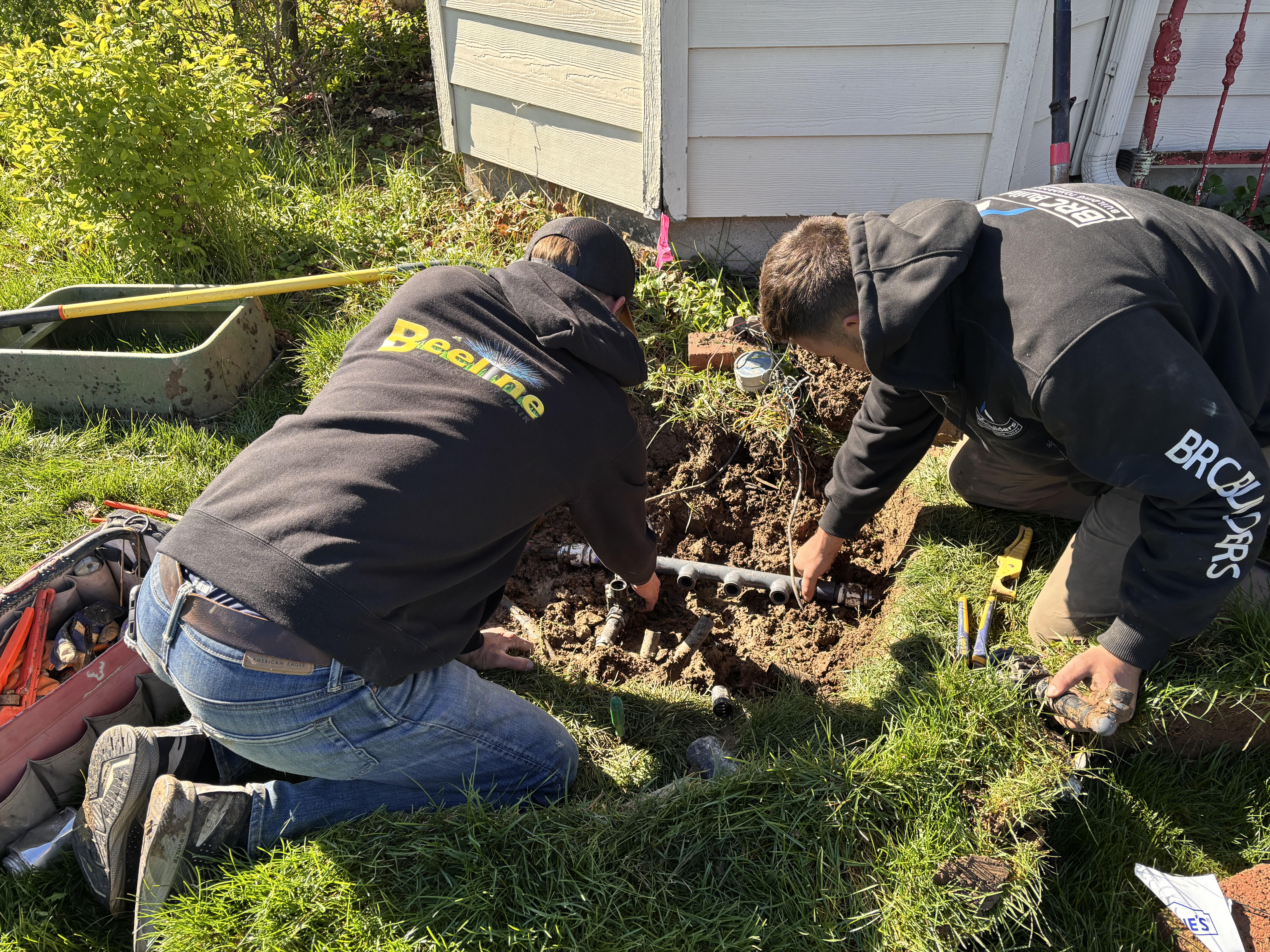
Low Pressure on One Irrigation Zone, What It Means
When one sprinkler zone is running with noticeably less pressure than the others. It is telling you something specific: the problem is inside that zone. This is actually good news for diagnosis. A pressure problem affecting every zone at once would point to the main supply line, the backflow device, or the water source. When it is just one zone. You can ignore all of that and focus on what is different about that circuit.
The four most common causes for a single weak zone are a broken or cracked lateral line, a valve that is not fully opening, heads that are clogged or worn, and a zone that has simply been overloaded with more heads than the water supply can adequately serve. Each one has a slightly different signature, and knowing which one you are looking at before any digging starts is how Beeline keeps repair visits efficient and the bill predictable.
Low pressure on one zone is one of the most common calls we receive throughout the Treasure Valley, especially in the spring after the system comes out of dormancy. Freeze damage over the winter frequently causes cracked fittings that go unnoticed until the zone runs for the first time in the season.
How to Spot It
The easiest way to investigate is to manually activate the problem zone from the controller, then walk every head in that zone while it runs. Watch for heads that barely pop up above ground, a misting spray instead of a clean arc, and bubbling water or unusually soft or wet soil anywhere along the zone's path. Any of these signs narrows down where the pressure is being lost.
- Heads barely pop up or produce a weak mist instead of a full spray arc
- Bubbling water at or just below the soil surface when the zone runs
- A sunken or perpetually wet area of lawn even when the system is not running
- One head on the zone sprays normally while the others are all weak
- Pressure drop happened suddenly, fine one week, noticeably weak the next
- Zone has been underperforming since the system was first installed
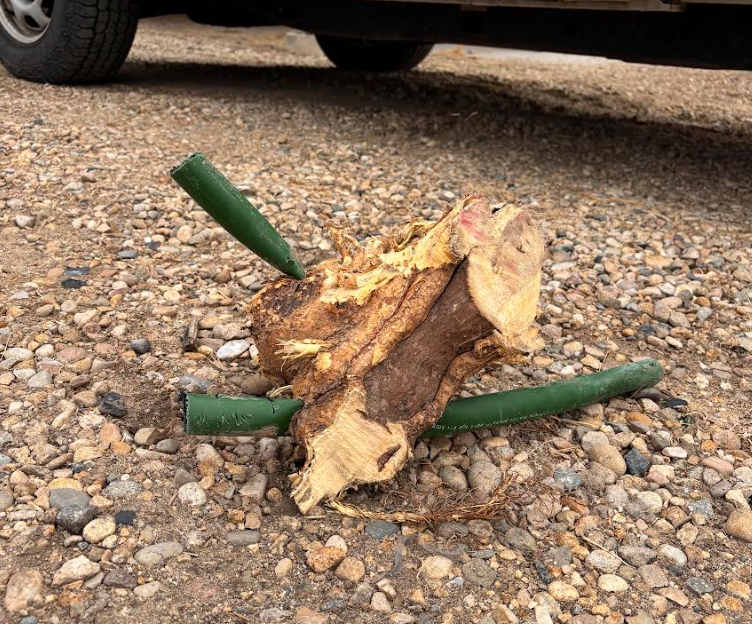
A root ball that grew around a main line and crushed it. Root intrusion is one of the most common causes of a sudden pressure drop, and it usually shows up on the far side of the break first.
Sudden vs. Gradual Pressure Loss
The timing of when the pressure loss started is one of the most useful clues. A sudden drop. A zone that was working fine last week and is now clearly underperforming, almost always means a physical break somewhere in the lateral line or at a fitting. This can happen from freeze-thaw damage over an Idaho winter, from a shovel or edger nicking the line during yard work, from tree root intrusion over time, or simply from a fitting that finally gave out after years of pressure cycling. When you see a sudden change, the first thing to do is walk the zone and look for wet ground or soft soil spots.
Gradual pressure loss over a season or across multiple seasons is a different story. That pattern usually points to a valve that is slowly failing, most often the diaphragm, which can deteriorate and no longer open fully, or to heads that have accumulated debris and are restricting flow. Both are common across Treasure Valley systems every irrigation season. Neither requires digging up the zone. In most cases, a valve diaphragm swap or a head cleaning and replacement resolves a gradual pressure issue completely.
Too Many Heads on One Zone
A zone that has never had adequate pressure and has felt weak since the day the system was installed is almost always an overloaded zone. Each sprinkler head has a rated flow requirement, the amount of water it needs to operate at the right pressure. When too many heads are placed on one zone, the total flow demand exceeds what the lateral line and valve can supply, and every head on that zone runs at reduced pressure. No one head is broken. The whole zone is just undersized for the number of heads it is being asked to run.
This issue is particularly common on new construction homes in Meridian, Caldwell, and Star. When irrigation systems are installed as part of the build process on a tight schedule, contractors occasionally split zones to save valve costs or combine areas that should have been separated. The result is a zone that technically runs but never performs well. The fix involves either splitting the zone into two circuits, which requires adding a valve and additional lateral line, or removing a few heads and capping those areas. Beeline can assess the hydraulics of any zone and give you a straight answer on what it will take to bring it up to spec.
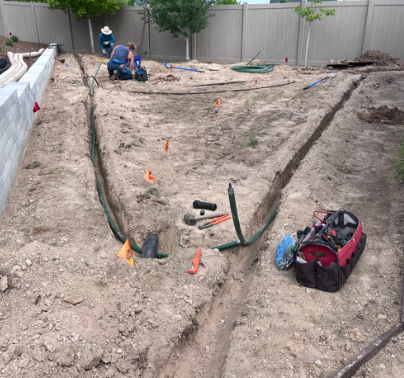
New construction install in Meridian. Builder-installed systems are where we see overloaded zones most often, and the fix is usually adding a circuit rather than replacing anything.
Valve Problems vs. Line Problems
The difference between a valve problem and a line problem is important for budgeting the repair. A valve that is not opening fully will reduce pressure to the entire zone uniformly, every head will be weak by about the same amount. A broken lateral line, by contrast, creates a more uneven pattern. Heads on the near side of the break (between the valve and the break point) may run fine, while heads on the far side, past the break, will be weak or get no water at all. If you can identify which specific heads are affected. You have already narrowed down where in the zone the problem is.
Valve repairs almost never require digging. Beeline can access the valve in its box, replace the diaphragm or solenoid, test the zone, and be done in under an hour in most cases. A broken lateral line repair does require locating the break point, carefully excavating to expose the damaged section, replacing or coupling the pipe, and pressure testing before backfilling. The total scope depends on how deep the line is and how large the break is, but most lateral repairs are completed in a single visit as well.
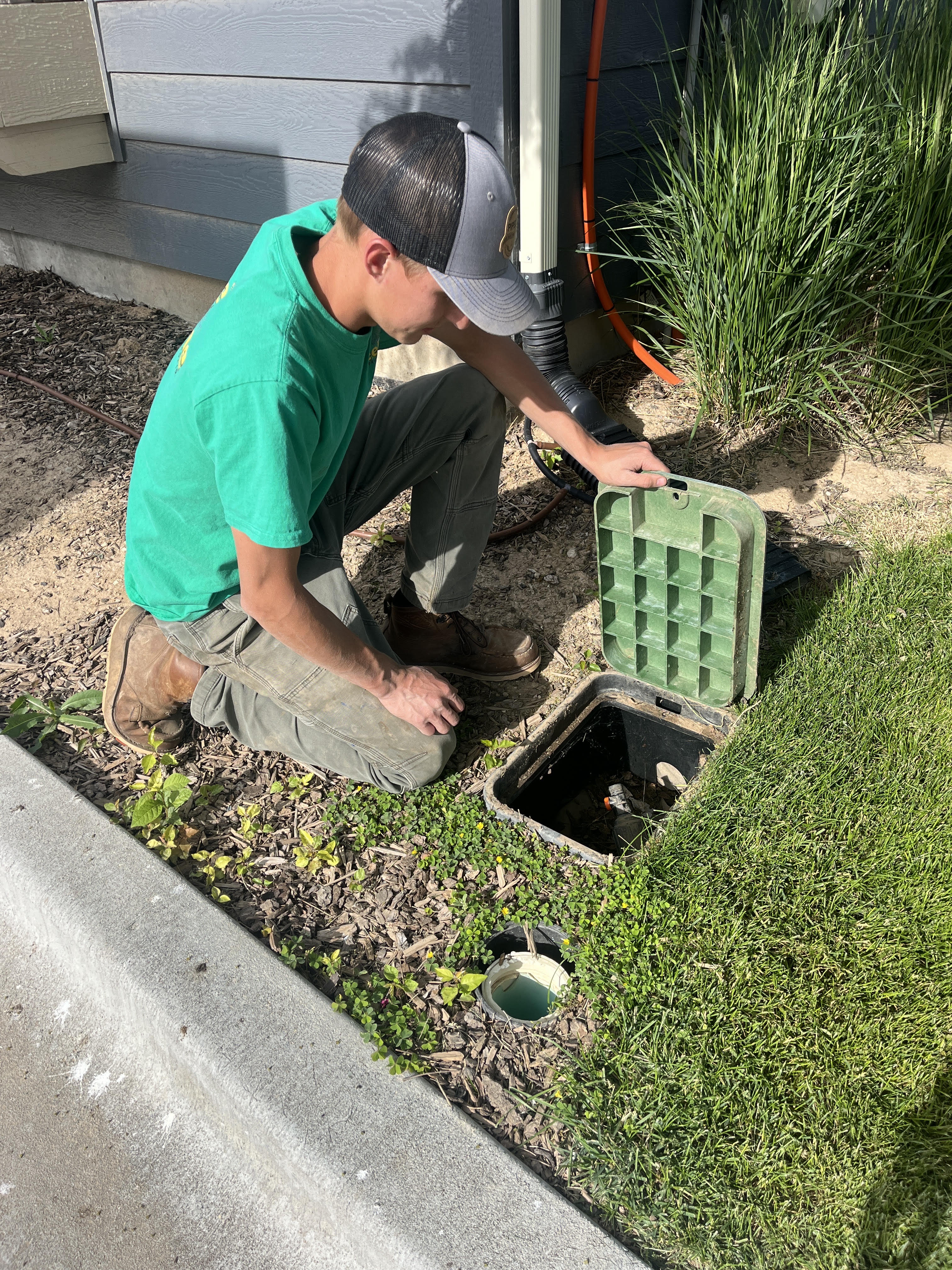
Valve diaphragm service in Meridian, valve repairs don't require digging and are usually done in under an hour.
What We Do
When Beeline arrives for a low-pressure zone call, the first step is always to run the zone and walk it with the homeowner. We are looking at which heads are affected, where the boundary of the pressure drop is, and whether there is any visible surface evidence of a line break. This walk-the-zone approach usually gets us to the root cause before any tools come out. If the pattern points to a valve, we open the valve box and do a bench test on the diaphragm and solenoid. If it points to a line, we probe the area and use water tracing to pinpoint the break before digging anything.
We give you a clear diagnosis and a cost before any work begins. Most low-pressure zone repairs, whether it is a valve diaphragm, a broken lateral, a head swap, or a zone-split, are resolved in a single visit. We pressure test the repaired zone before we leave to confirm it is working correctly, and we walk you through what was done and what to watch for going forward. Beeline serves all of Nampa, Meridian, Boise, Caldwell, Star, Eagle, Kuna, and Middleton.
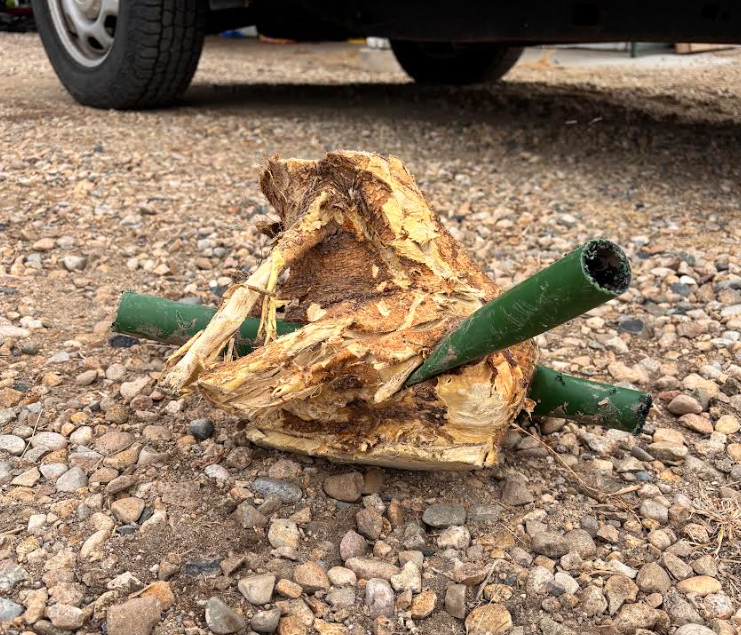
Roots cleared off a damaged line on a low-pressure call. We locate the break before we dig, repair the section, then pressure test the zone before backfilling.
Sprinkler Repair
Heads, valves, wiring, and line leaks diagnosed and fixed across the Treasure Valley.
Valve Repair
Diaphragm swaps, solenoid replacement, and full valve assemblies, most in a single visit.
Main & Drain Replacement
Full irrigation main line replacement with pressure testing before backfill.
Spring Turn-On
Full zone activation and freeze damage check every spring to catch problems early.
Weak Zone? We'll Find It.
Licensed and insured. We diagnose low-pressure irrigation zones across the entire Treasure Valley, same-day service available.
Request Service Online 📞 Call or Text (208) 880-2712Licensed and Insured
Idaho Registered Contractor
Liability Coverage on Every Job

Related Services
Other Troubleshooting Guides
Contact
- 📞 (208) 880-2712
- ✉ beelinesprinklerrepair@gmail.com
- 5606 W Amity Rd, Nampa, ID 83687
- Serving all of the Treasure Valley