Bad Sprinkler Coverage in the Treasure Valley
Bad coverage is one of the most frustrating irrigation problems because the system appears to be working. The controller fires, the heads pop up, water comes out, and your lawn still looks patchy in July. The issue is not always a broken component. More often. It is heads that are no longer aimed at the right area, rotors that have drifted off their arc, or spray heads that were nudged out of position over the winter.
Treasure Valley lawns rely almost entirely on irrigation from May through September. With an average of only 12 inches of annual rainfall in Nampa and Meridian, every zone needs to be properly calibrated or parts of your turf simply will not get enough water to survive the summer heat. A coverage problem that seems minor in May turns into dead grass by July.
The good news is that most coverage problems are fixed without replacing anything. Adjusting arc, radius, and head position during a spring turn-on service catches the majority of these issues before the season starts. If heads have tilted or shifted in the ground. They can usually be repositioned in minutes during the same visit.
Signs Your Coverage Is Off
Coverage problems are not always obvious from a distance. Walk your yard while the system is running and look for these common signs that something is aimed at the wrong place or not reaching where it should:
- Dry corners or edges of the lawn even though the system runs on a regular schedule
- Heads visibly spraying onto the driveway, sidewalk, fence, or the side of the house
- One area of the yard is always too wet while a neighboring area is always too dry
- A rotor head is turning but not completing its full arc or stopping short of its intended coverage zone
- Brown patches that persist through the summer despite the system appearing to run normally
- Coverage gaps that appeared or worsened after the previous winter or after recent lawn aeration or edging work
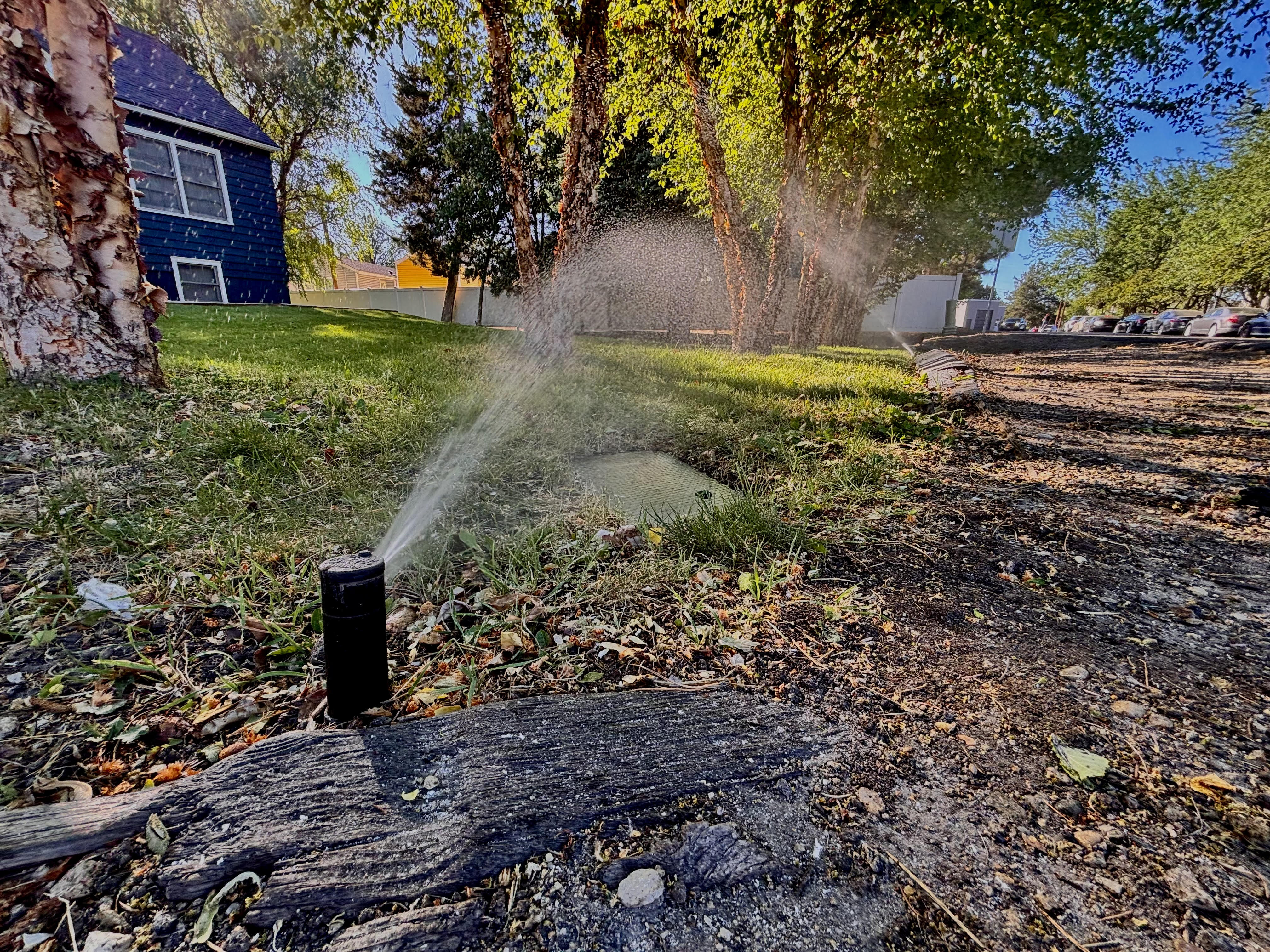
Sprinkler head tune-up and arc adjustment at a Meridian property during a spring turn-on visit.
Why Heads Get Out of Alignment
Idaho winters are hard on irrigation systems even when they are properly winterized. The ground movement that comes with repeated freeze and thaw cycles, particularly in the clay-heavy soils common across Nampa, Caldwell, and Kuna, causes heads to shift, tilt, and gradually sink below grade over time. A head that was perfectly aimed in the fall may be spraying at a 20-degree angle by spring. This is not a sign of a poor installation; it is just the reality of Idaho soil behavior over multiple seasons.
Mechanical damage from lawn mowers is the other leading cause. Rotary mowers clipping the top of a head over several seasons will gradually push it down into the ground or tilt it sideways. Even a single solid hit from a mower deck can knock a rotor head far enough off course to leave a dry spot in an otherwise healthy lawn. In most cases the head itself is undamaged and just needs to be repositioned and the arc re-dialed.
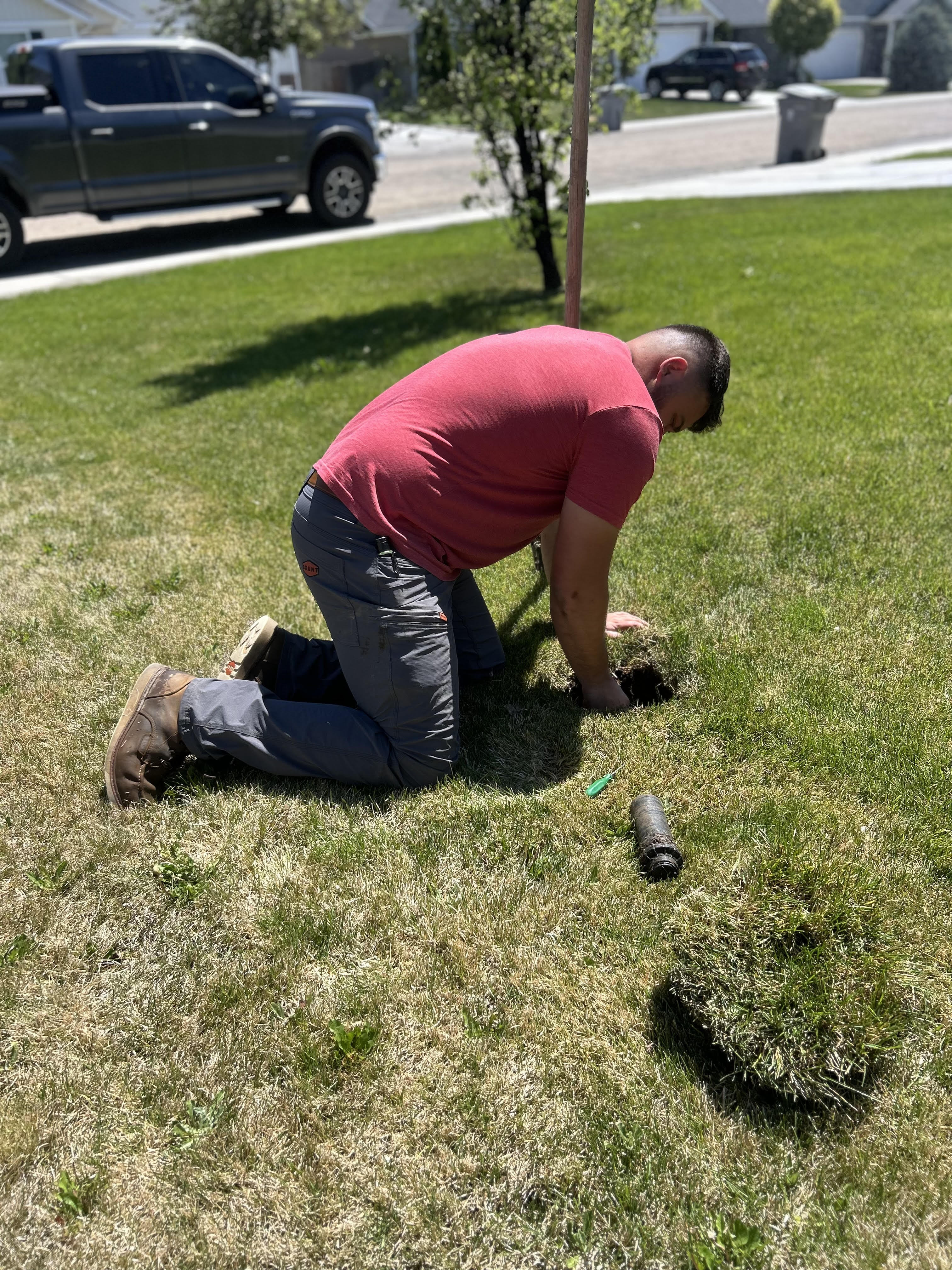
Sprinkler head repositioned and arc re-dialed after mower damage in Middleton.
Spray Heads vs. Rotor Heads - Different Adjustments
Understanding which type of head you have matters because the adjustment process is completely different. Spray heads, also called fixed spray heads, deliver a constant fan-shaped pattern and cover a radius of roughly 4 to 15 feet. The arc and radius are set by the nozzle itself. To adjust coverage on a spray head you rotate the nozzle body or swap the nozzle for one with a different arc. A spray head in a corner gets a 90-degree nozzle; an edge strip gets a 180-degree nozzle. Most spray heads can also be adjusted for radius using a small screw on the nozzle face that restricts flow.
Rotor heads rotate back and forth across a set arc and cover larger areas, typically 15 to 40 feet. They apply water more slowly than spray heads, which makes them better suited for slopes and for Idaho's heavy clay soils that absorb water slowly. The arc and rotation stops on a rotor are adjusted using a small key tool inserted into the top of the head. One important rule: spray heads and rotor heads should never be mixed on the same zone. They have very different precipitation rates, and mixing them guarantees that some areas are overwatered while others stay dry no matter how you adjust individual heads.

Head replacement at a Nampa property, matching the right nozzle to the zone.
The Fix
Most coverage adjustments are completed during the annual spring turn-on visit. We run every zone, walk the property, and check each head's arc, radius, and vertical position while the system is live. Spray head nozzles that are aimed wrong get rotated. Rotor arcs that have drifted get reset with the adjustment key. Heads that have sunk below grade or tilted in the ground get repositioned. In most cases a full coverage tune-up for an average residential system takes one to two hours and every problem is addressed in a single visit.
If heads have broken nozzles, cracked bodies, or internals that no longer function correctly. We carry common replacement heads and nozzles on the truck. Most residential head replacements are completed on the spot. If your system consistently develops coverage problems season after season in the same zones, that may point to a design issue such as heads spaced too far apart or wrong nozzle types for the zone size. We will tell you straight up if that is what we find and give you options before any additional work begins.
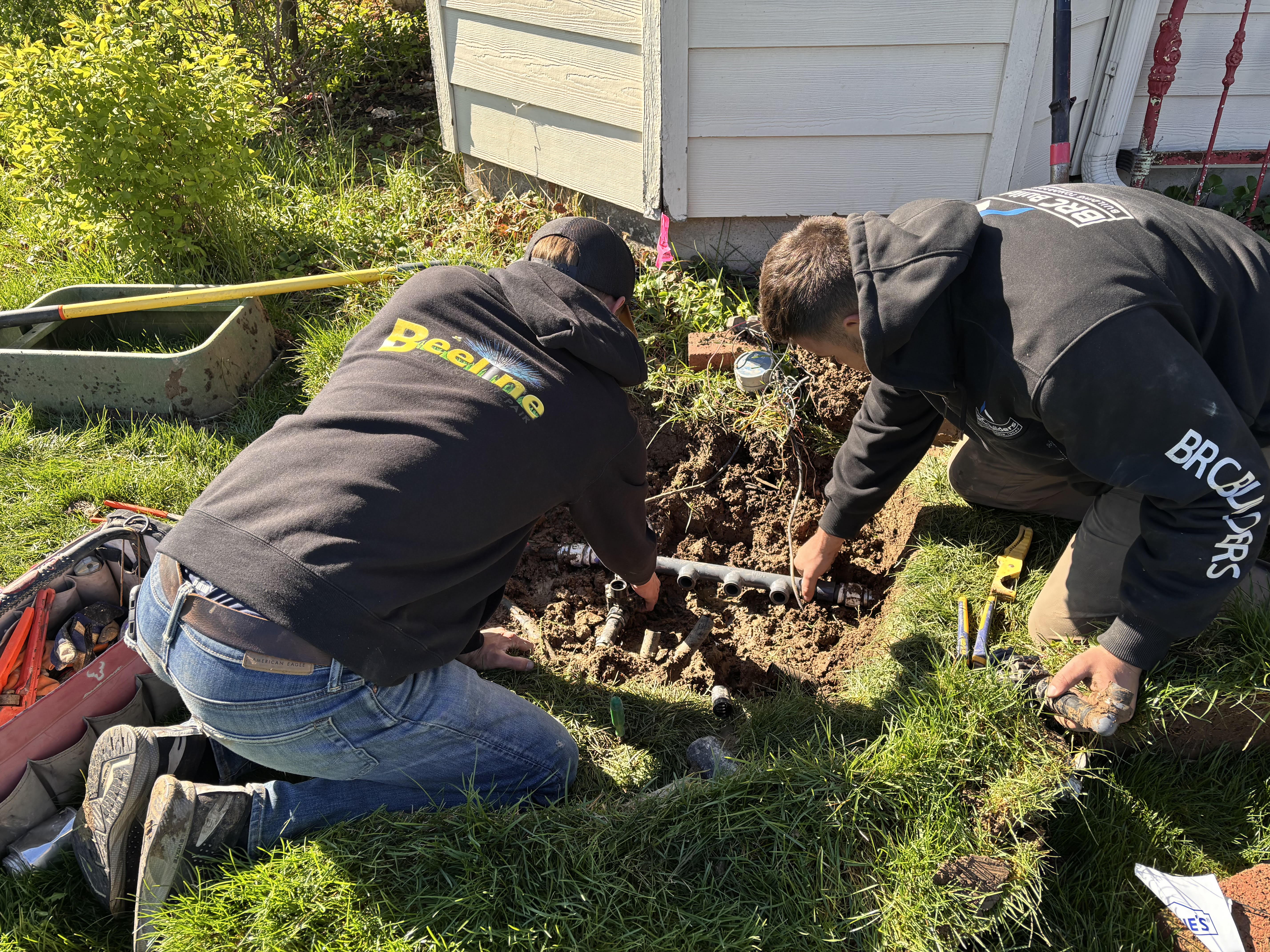
Beeline technician rebuilding a valve manifold during a repair visit in Caldwell, ID.
Sprinkler Repair
Broken heads, valves, wiring, and line leaks diagnosed and fixed across the Treasure Valley.
Spring Turn-On
Full zone activation, coverage adjustment, and controller calibration every spring.
Head Replacement
Broken or worn spray heads and rotors replaced with the right head for your zone.
Valve Repair
Zone valves that won't open or close repaired or replaced in a single visit.
Fix Your Coverage
Bad coverage is usually a quick fix. We adjust heads and check every zone across the Treasure Valley. Licensed, insured, and family owned.
Request Service Online 📞 Call or Text (208) 880-2712Licensed and Insured
Idaho Registered Contractor
Liability Coverage on Every Job

Related Services
Other Troubleshooting Guides
Contact
- (208) 880-2712
- beelinesprinklerrepair@gmail.com
- Serving the Treasure Valley