Dead Spot in the Lawn, What’s Really Going On
A dry brown patch that won’t recover even with regular irrigation is almost always a sprinkler coverage problem, not a grass disease or soil issue. The most common cause is a single sprinkler head that has stopped doing its job: it may be clogged with debris, tilted at the wrong angle after frost heave, buried below grade from soil settlement, or not rotating if it is a rotor-type head. When one head fails to cover its assigned arc, the grass in that zone simply stops getting water.
The Treasure Valley’s climate makes this particularly easy to spot, with only 12 inches of annual rainfall in Nampa and Meridian, a single missed head creates a visible dead zone by mid-June. Any dry patch that appears season after season in the same spot almost certainly traces back to a coverage gap that has never been corrected.
The good news is that most dead spots are fixed without replacing the head. A clogged nozzle can be cleaned. A tilted head can be repositioned. A buried head can be raised with an extension riser. All of these repairs are typically done during a single visit and most take less than 30 minutes per head.
How to Tell If a Head Is the Problem
Run the zone that covers the dead area and walk it while it runs. A clogged spray head will either fail to pop up fully, produce a weak or distorted spray, or in some cases fail to retract after the zone shuts off, a sign the wiper seal is worn. A rotor head that has stopped rotating will spray in one fixed direction and leave the rest of its coverage arc dry. A buried head will pop up but not reach the spray height needed to cover its full radius.
- Head fails to pop up fully or sprays a weak, distorted arc
- Rotor head turns in only one direction or not at all
- Head sits below grade and does not reach full spray height
- Head stays up after the zone shuts off (worn wiper seal)
- Spray visibly aimed away from the dead area
- Dead patch appears in the same spot every season
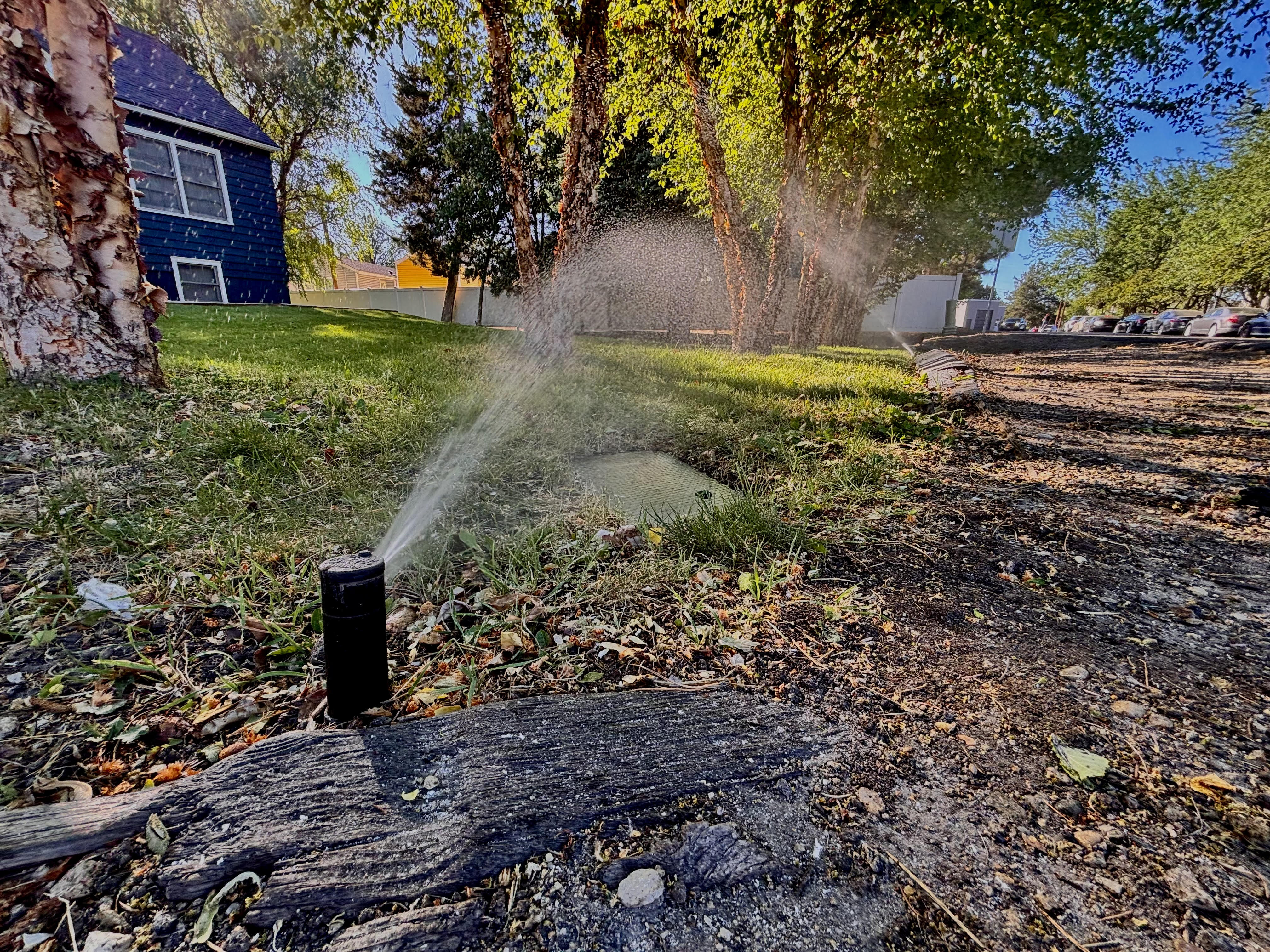
Sprinkler head tune-up and arc adjustment at a Meridian property, most dead spots trace back to a single head.
Common Causes Across the Treasure Valley
Idaho’s freeze-thaw cycles are hard on irrigation systems. Ground movement over the winter, particularly in the clay soils common across Nampa, Caldwell, and Kuna, pushes heads down below grade and tilts them sideways. A head that was perfectly aimed in the fall may be pointing at the sidewalk by spring. This is one of the most common findings during spring turn-on inspections, and it is entirely reversible.
Mower damage is the second leading cause. A rotor head hit by a mower deck gets pushed out of position or knocked sideways. In many cases the head itself is undamaged and just needs to be repositioned and the arc re-dialed. Only if the body is cracked or the internals are damaged does the head need to be replaced. Most head replacements are done on the spot using common Rainbird or Hunter heads carried on the truck.
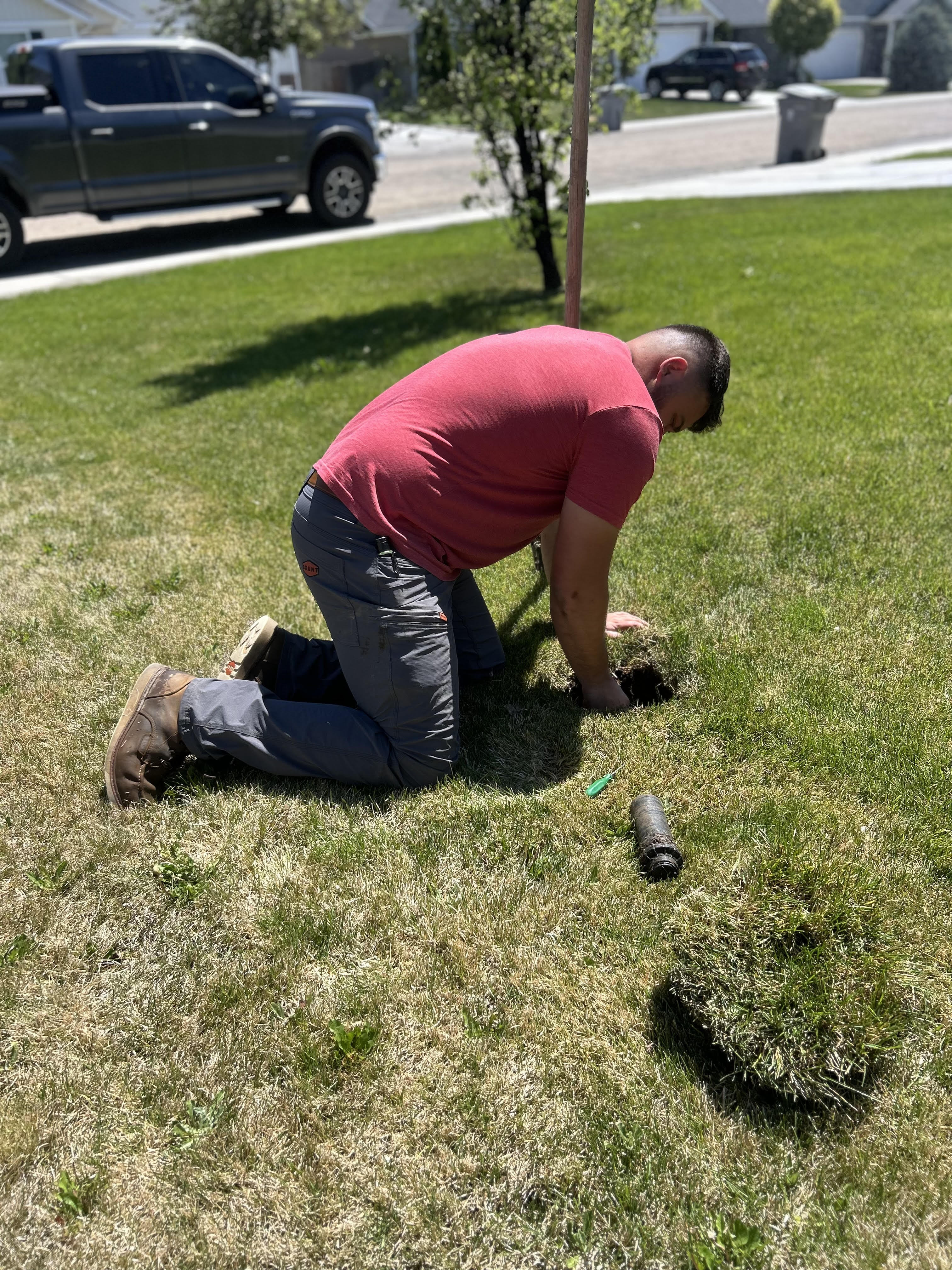
Head repair in Middleton, most dead spots trace back to a single head that needs adjustment or replacement.
What Beeline Does
When we arrive for a dead spot call. We run the affected zone and walk it with the homeowner. We watch each head while the zone runs and identify exactly which head is responsible for the dead area and what the specific failure mode is. For a clog, we remove the nozzle cap and rinse the filter screen. For a tilted head, we reposition it level with the turf and re-dial the arc. For a buried head, we extend the riser or replace the body with a higher-profile unit. For a broken body. We replace the head and match the nozzle to the zone.
We confirm coverage is restored before leaving. If the dead spot is caused by multiple heads or a zone-wide coverage design issue. We walk you through the options and give you a clear cost estimate before any additional work begins.
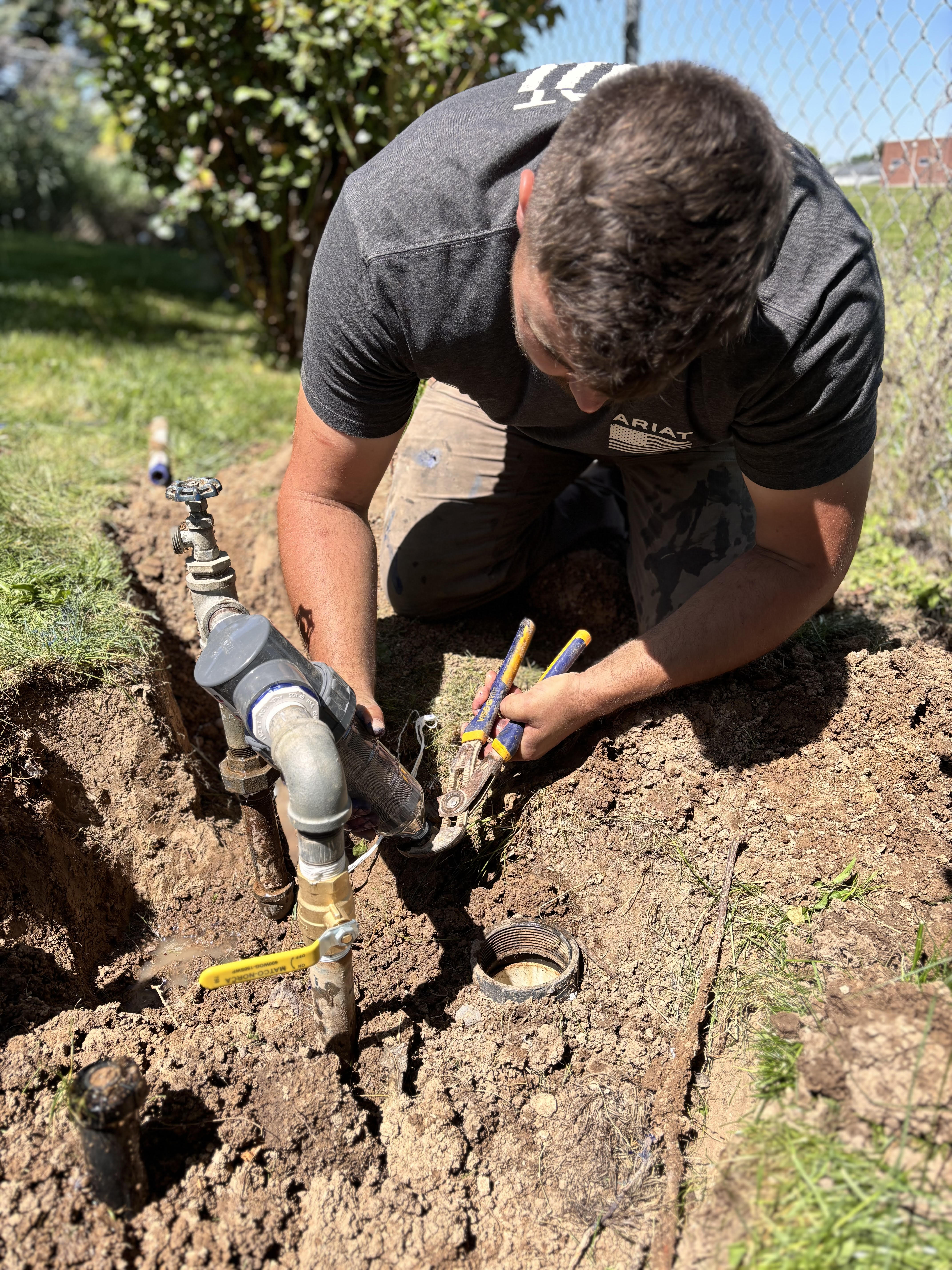
Cleaning a clogged sprinkler filter, a quick fix that often restores full head coverage.
Sprinkler Repair
Broken heads, valves, wiring, and line leaks diagnosed and fixed across the Treasure Valley.
Spring Turn-On
Full zone activation, coverage adjustment, and controller calibration every spring.
Head Replacement
Broken or worn spray heads and rotors replaced with the right head for your zone.
Valve Repair
Zone valves that won’t open or close repaired or replaced in a single visit.
Fix That Dead Spot
Most dead spots trace to one head. We find it, fix it, and confirm coverage is restored before leaving. Licensed, insured, and family owned.
Request Service Online 📞 Call or Text (208) 880-2712Licensed and Insured
Idaho Registered Contractor
Liability Coverage on Every Job

Related Services
Other Troubleshooting Guides
Contact
- (208) 880-2712
- beelinesprinklerrepair@gmail.com
- Serving the Treasure Valley