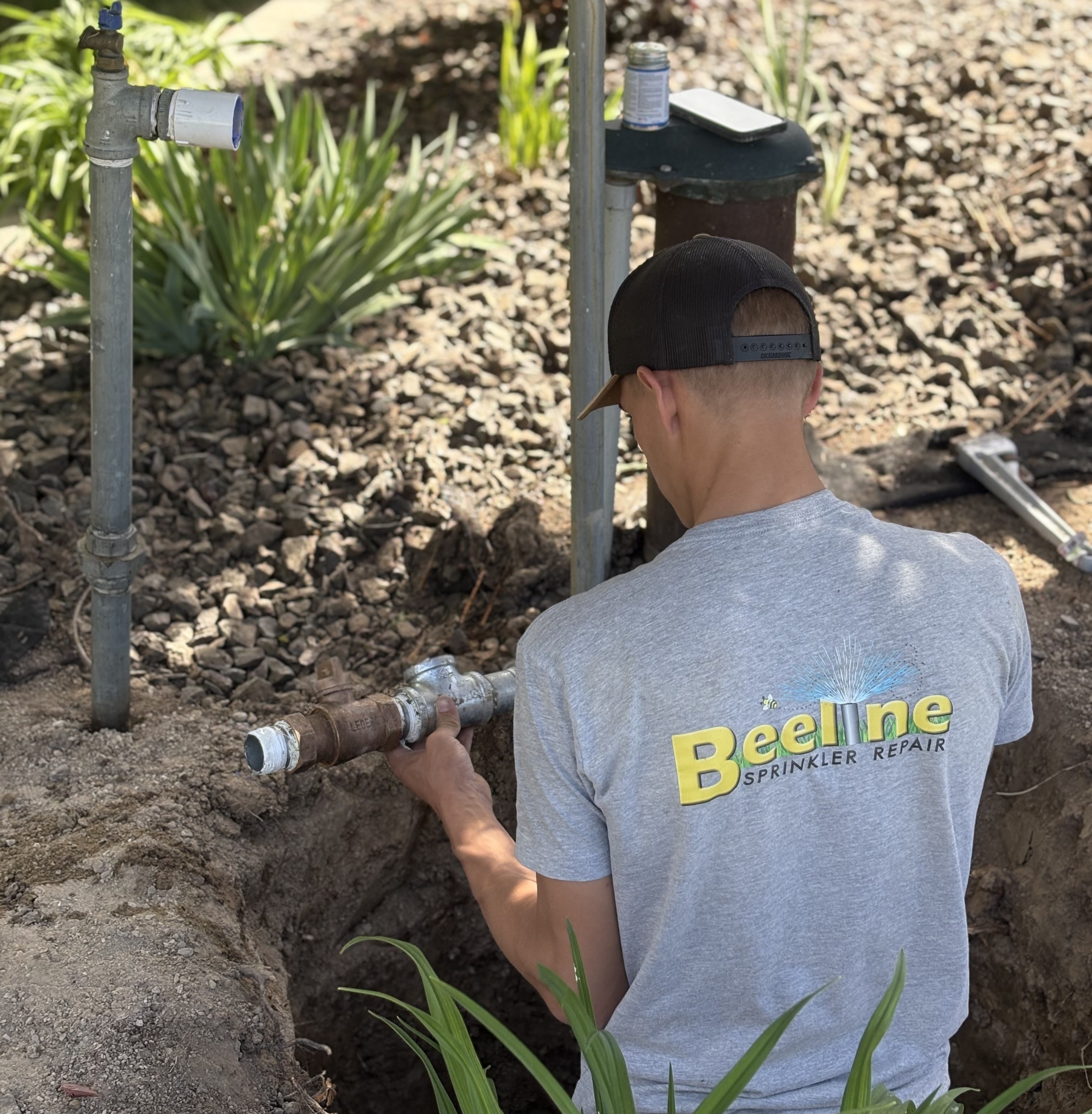
Backflow Preventer Repair & Installation, Boise, ID
Every residential and commercial irrigation system connected to Boise's potable water supply is required by Idaho plumbing code to have a functioning backflow prevention device. That single fitting between your water meter and your sprinkler system keeps fertilizers, pesticides, soil bacteria, and any other contaminants that might enter your irrigation lines from siphoning backward into the drinking water supply. It is not optional equipment. It is a code requirement and a public health safeguard.
Beeline Sprinkler Repair services backflow preventers across Boise and the surrounding area. We diagnose failing assemblies, replace freeze-damaged units, repair worn internal components when practical, and help homeowners and property managers get back into compliance after a failed annual test. Call (208) 880-2712 to schedule a diagnosis.
What a Backflow Preventer Does and Why Boise Requires One
Municipal water systems in Boise are maintained under positive pressure, water flows out of the tap because it is being pushed by the city. Under normal conditions that pressure prevents anything from flowing backward into the supply lines. But pressure can drop during a main break, a fire hydrant flush, or a large demand event. If your irrigation system contains any standing water, that drop in pressure can allow it to siphon back through your connection and into the potable supply.
A backflow preventer is a mechanical check assembly that creates a one-way gate at the irrigation connection point. When pressure drops or reversal occurs, the device closes automatically and blocks any back-siphonage or back-pressure event. Idaho plumbing code mandates one on every irrigation system tied to the potable supply. The City of Boise water utility enforces this requirement as part of its cross-connection control program.
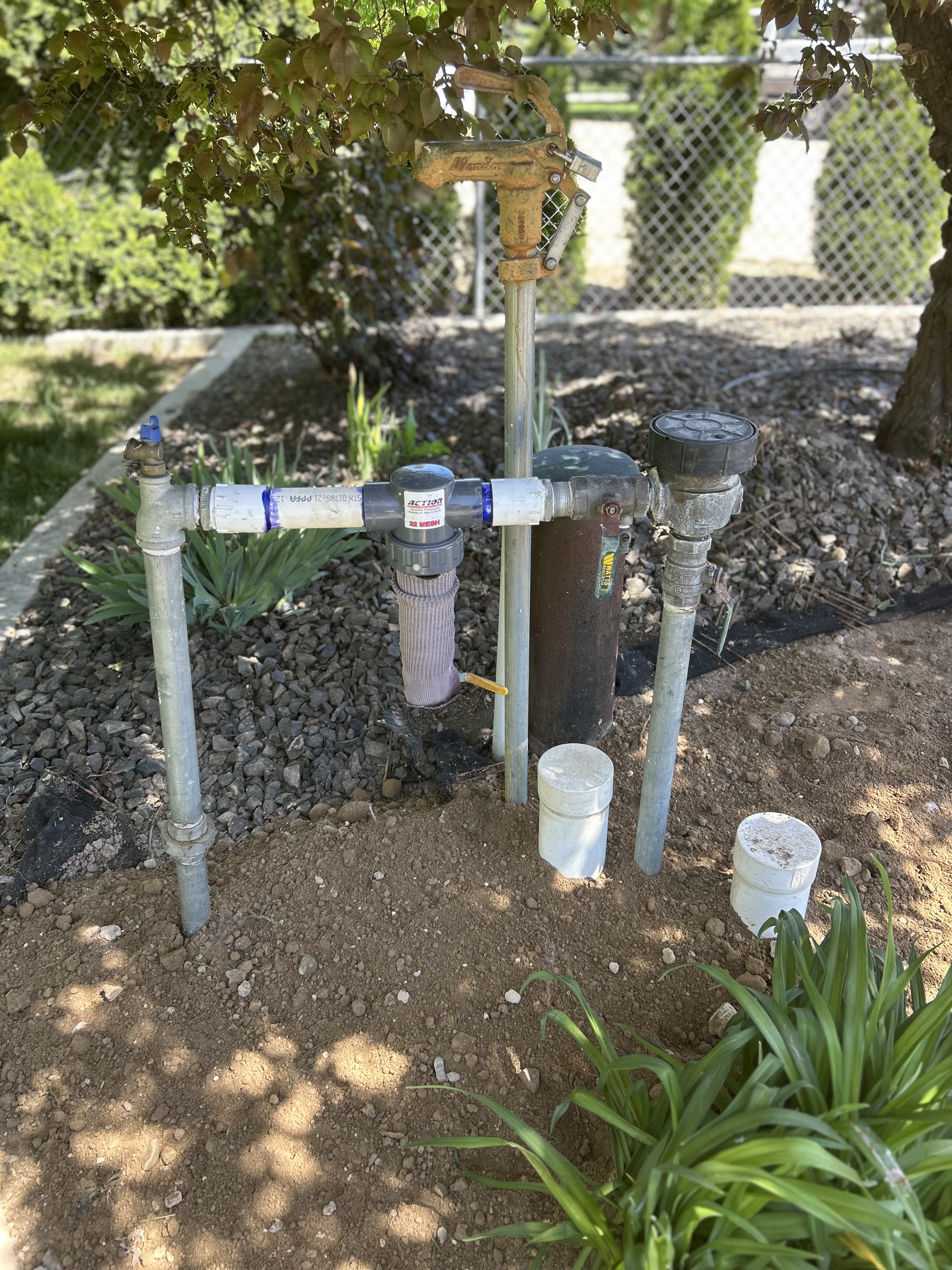
Types of Backflow Devices Used on Boise Irrigation Systems
Pressure Vacuum Breaker (PVB). The most common backflow device on residential irrigation systems in Boise. A PVB is installed above ground, above the highest sprinkler head on the system, and protects against back-siphonage. It uses a spring-loaded check valve and an air inlet that opens when pressure drops, breaking any vacuum that could pull water backward. PVBs are relatively compact, cost-effective, and straightforward to service, which is why they are the standard choice on the vast majority of Boise homes.
Reduced Pressure Zone (RPZ) Assembly. An RPZ provides a higher level of protection than a PVB and is typically required for commercial irrigation systems, properties with fertilizer injection systems, or any connection classified as a higher hazard by the water utility. An RPZ contains two independently acting check valves and a pressure-monitored relief valve in between. If either check valve fails, the relief valve opens and discharges water rather than allowing backward flow. RPZ assemblies are larger, require a more involved installation, and in many Boise-area jurisdictions must be tested annually by a certified tester.
Double Check Valve Assembly (DCVA). A double check valve uses two spring-loaded check valves in series and provides protection against back-pressure and back-siphonage for low-to-medium hazard applications. DCVAs can be installed above or below ground and are common on commercial properties and some higher-end residential systems where more robust protection is desired. Like RPZs, double check assemblies are subject to periodic testing requirements in many jurisdictions.
Idaho Code & City of Boise Requirement: Idaho plumbing code requires a backflow prevention device on all residential irrigation systems that connect to the potable water supply. The City of Boise enforces this requirement through its water utility. If your system was installed without one, or if your existing device failed testing. We can diagnose, repair, or replace it.
Boise City Code and Annual Backflow Testing
Idaho state plumbing code requires backflow prevention on all irrigation systems connected to the potable water supply. The City of Boise water utility operates a cross-connection control program that requires backflow devices to be installed and maintained. New installations must have a compliant device in place before the system is put into service.
Beyond installation, some Boise-area municipalities and water districts also require periodic testing and certification of backflow assemblies, particularly RPZ devices on commercial properties or high-hazard connections. If your water utility has sent you a notice requesting a test report, that means your assembly must be inspected by a certified backflow tester and a record submitted to the utility. We can evaluate your assembly, repair or replace any failing components, and help you understand what documentation your specific water district requires.
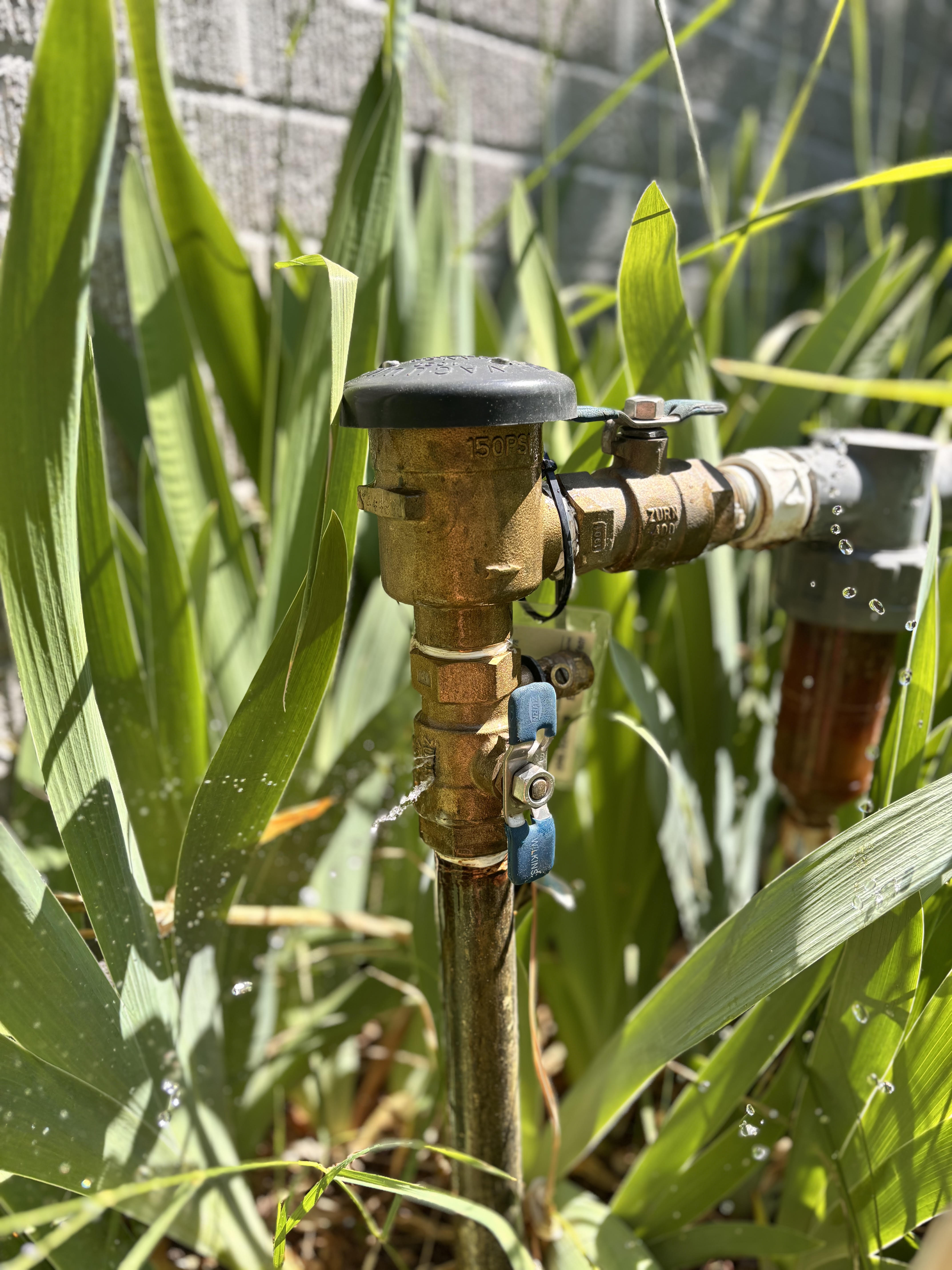
Freeze Damage to Backflow Preventers in Boise: The Most Common Problem We See
Of all the backflow problems we handle in Boise, freeze damage is by far the most frequent. Pressure vacuum breakers are installed above ground, typically on an exterior wall or riser pipe, which makes them fully exposed to Boise's hard winter temperatures. When a PVB is not properly drained before the first freeze, any water trapped inside the body freezes, expands, and cracks the brass housing, splits the bonnet cap, or damages the internal seats and poppets.
The symptoms of a freeze-damaged PVB are usually obvious in spring: water spraying from the relief valve port when the system is pressurized, a cracked or visibly damaged body, low pressure on every zone when the system runs, or water leaking continuously from the assembly even when no zones are active. None of these symptoms will resolve on their own. A cracked body requires replacement, and a compromised assembly is not protecting your potable water supply.
- Water spraying from the relief valve port during system operation
- Visible cracks in the brass body or bonnet cap
- Low or uneven pressure across all irrigation zones
- Continuous dripping from the assembly when no zones are running
- Water pooling at the base of the backflow preventer
Repair vs. Replacement, What We Recommend
Not every failing backflow preventer needs to be replaced entirely. In many cases, the assembly body is intact and in good condition while internal components, poppets, seat discs, springs, or the bonnet seal, have worn out or fouled. When the body is sound. We can rebuild the internal components of a PVB at a fraction of the cost of full replacement, restoring it to proper operation. This is often the right call on a newer or relatively recent installation.
Full replacement is necessary when the body is cracked (freeze damage), when the device has corroded beyond rebuilding, when the assembly has failed a certified backflow test and internal repairs would not restore it to passing condition, or when the existing device is not the correct type or size for the system. We carry common PVB and RPZ replacement units on our service trucks, so in most cases we can replace a failed assembly in a single visit.
- Internal rebuild recommended when: body is intact, internal components are worn
- Full replacement recommended when: freeze cracking, failed test, undersized unit, corrosion
- New installation required when: system has no existing backflow preventer
When a New Backflow Preventer Is Required
There are three situations where a new backflow preventer installation is required rather than a repair: when a system was never equipped with one to begin with (a code violation that needs to be corrected), when an existing device has failed a certified backflow test and is not repairable, and when irreparable physical damage, most commonly freeze cracking, has destroyed the assembly.
We also see new backflow installations required when homeowners add an irrigation system to a property that previously had only a hose bib connection, or when a system is expanded significantly and the original device is no longer sized correctly for the flow demand.
Boise Hunter Homes, New Backflow Installations on Custom Properties
Boise Hunter Homes builds custom homes throughout the Boise area, and their properties routinely include new irrigation systems that require properly sized and installed backflow preventers from the start. We have worked on multiple Boise Hunter Homes properties where the backflow preventer was either not correctly sized for the system's pressure and flow demand, or where the freeze season exposed a gap in how the device was positioned and protected.
Getting the backflow preventer right on a new installation matters from day one, both for code compliance and for long-term system performance. An undersized PVB will choke flow to the zones; an incorrectly positioned one may not meet code height requirements above the highest head. We are familiar with the irrigation setups common to newer Boise custom builds and can size, install, and position the correct assembly for the system.
Boise Pressure Irrigation Note
Many Boise properties are served by the City of Boise pressure irrigation system, which delivers canal water from the Boise Project rather than potable city water. Pressure irrigation connections have their own backflow requirements separate from those that apply to potable water connections. If your irrigation system is on pressure irrigation (canal water), the relevant authority for connection and backflow requirements is the Boise City Canal Co., reach them at (208) 447-8600. We can work on the irrigation system itself, but questions about canal water connection compliance should go directly to them.