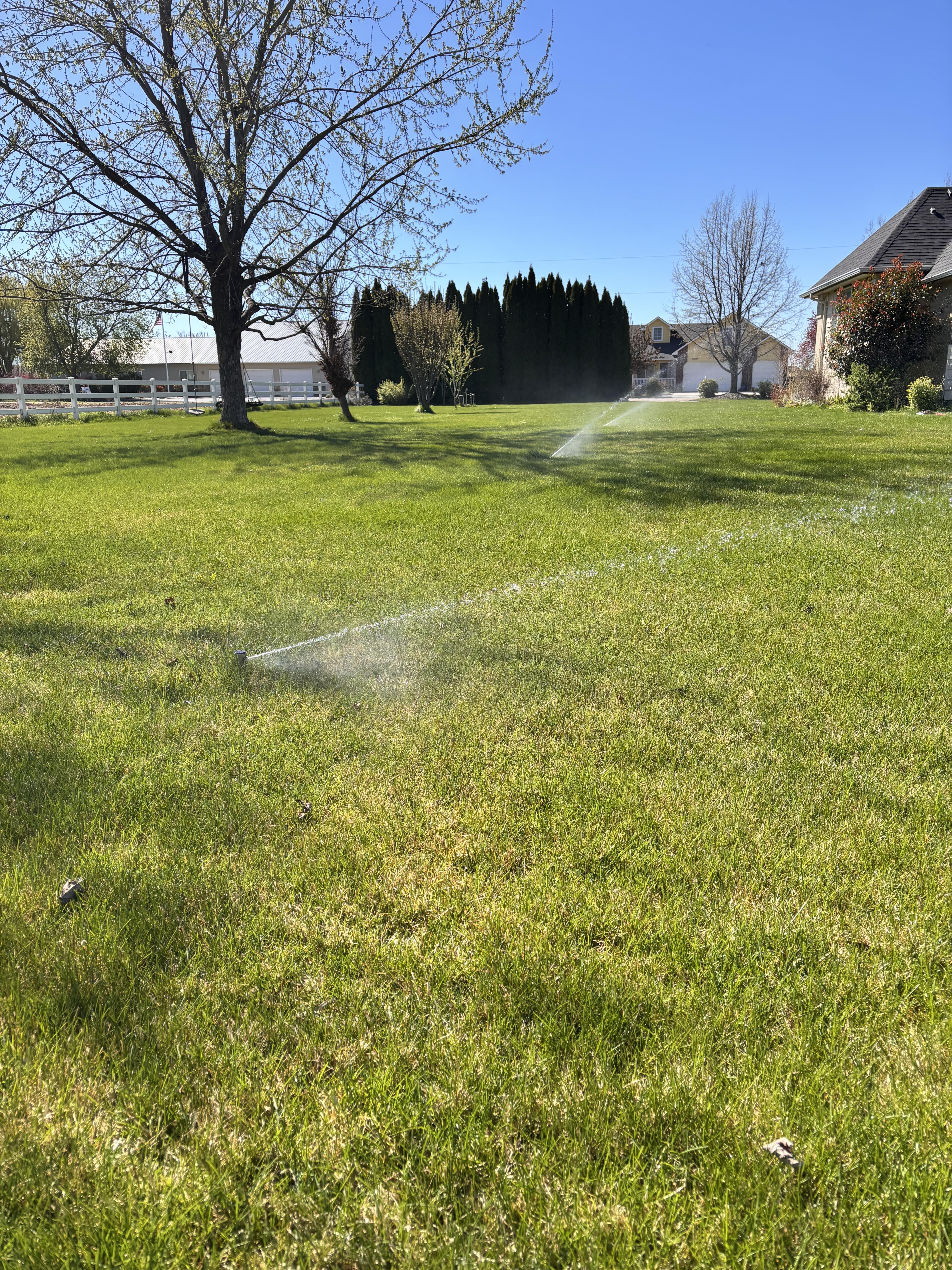
Sprinkler Blowout in Eagle, ID
"Beeline came out for our blowout in Eagle, on time, quick, done right. Three years running and they never miss."
Eagle's rapid growth means thousands of homeowners face sprinkler winterization for the first time every fall. The job is the same everywhere: clear residual water from lateral lines, valve bodies, and sprinkler heads with compressed air before temperatures drive the cold into the ground.
Beeline has been doing blowouts in Eagle since 2015. $75 flat for the first five zones, $6 per zone after that. We handle Settlers Irrigation, Thurman Mill, and potable water homes, no surprises on the invoice.
Eagle's First Freeze: When to Schedule
According to NOAA historical data, Eagle sits in Ada County at approximately 2,530 feet elevation, and the area sees its average first freeze between October 10 and October 15. A light frost at 31°F overnight does not immediately endanger buried lateral lines, the soil insulates the pipes for a short time. The real risk comes from a sustained hard freeze that drives cold deeper into the ground. That said, the reason to book early in September or early October has as much to do with our calendar as with freeze timing: Eagle's fall blowout season fills up fast, and a sudden cold snap can wipe out remaining appointment slots overnight.
Source: NOAA Climate Data, Boise Airport Station historical normals. Eagle is approximately 10 miles northwest of Boise at similar elevation.
Beeline's fall season runs second week of October through mid-November. Book in September or early October for the best appointment selection, mid-October slots go fast, and a freeze can close the window overnight.
Settlers Irrigation District, What Eagle Homeowners Need to Know
Much of Eagle is served by Settlers Irrigation District, (208) 344-2471 or Thurman Mill Irrigation, (208) 939-0900. Both shut off canal delivery in mid-October. Newer subdivisions and rural properties often run on potable city water instead.
Critical detail: the district shutoff stops water flowing in. It does not clear the residual water already in your private laterals, valve bodies, and heads. That standing water freezes and causes damage. Every Eagle home on either district still needs a compressed-air blowout. Potable water homes have no district shutoff at all. You are fully responsible for winterization.
New Eagle Subdivisions, First-Time Winterization
New developments. Avimor, Morgan Creek, Banbury Meadows, Bridgewater, Eagle Hills, Bainbridge, Floating Feather, Hill Road corridor, bring first-time winterization every fall. A brand-new irrigation system has the same freeze exposure as a 20-year-old one. If you moved in this year or last. Schedule your blowout for September and don't assume the builder handled it.
What Happens If You Skip the Sprinkler Blowout
"Skipped the blowout one year thinking Settlers shut everything off for us. Turned the system on in April and had a zone flooding underground. Lesson learned. Beeline does it every fall now."
Assuming Settlers or Thurman Mill protects your system is one of the costliest winterization mistakes Eagle homeowners make. The district shutoff stops delivery, your private laterals are still full of water. A sustained cold snap in January or February freezes and cracks whatever contains it.
The specific freeze damage we see most often from skipped blowouts in Eagle:
- Cracked PVC lateral lines where water was trapped in a low point or flat run
- Split sprinkler head bodies. The plastic cracks at the riser where it meets the lateral
- Damaged valve diaphragms and valve bodies in the manifold box
- Cracked poly pipe on older Eagle systems that predate modern PVC
- Damaged backflow preventers if they were not properly drained before winter
Repair costs run $150–$400+ depending on how many components cracked. A blowout is $75–$93 for most Eagle homes.
How the Sprinkler Blowout Process Works
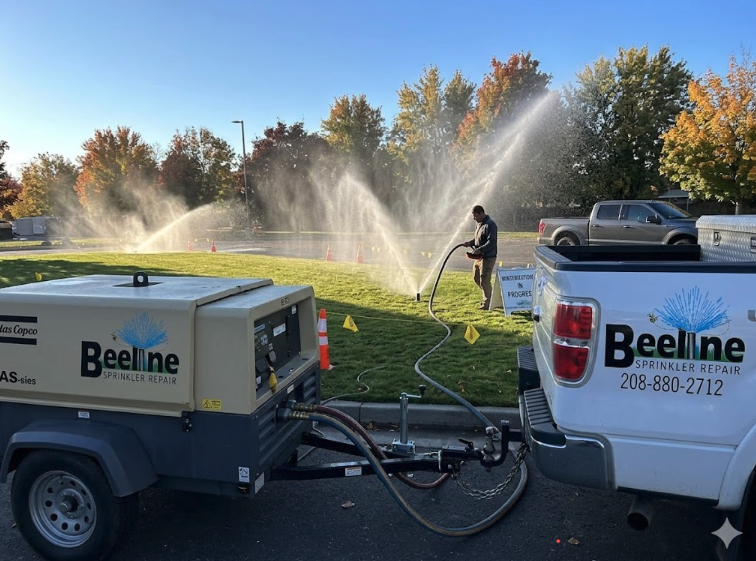
The compressed-air blowout process is straightforward when done correctly. Here is how Beeline handles it:
- We connect a commercial-grade air compressor to the system's blowout port, typically located near the backflow device or main shutoff
- We open each zone one at a time through the controller, allowing compressed air to push through the lateral lines and out through the sprinkler heads
- We watch each zone until the heads are running clear, no water misting out, just air
- We run each zone in short bursts to avoid overheating heads with prolonged air pressure
- We confirm all zones are completed before leaving, and flag anything that looked unusual so you know what to watch in spring
Why Draining Alone Is Not Enough
Some homeowners assume they can open the drain valve on the system and let gravity clear it. The problem is that gravity drainage only clears the main line. It does not remove residual water trapped in lateral lines that run uphill or along flat grade changes, inside valve bodies and diaphragms, or in the lower portions of sprinkler head bodies. That trapped water is exactly what freezes and causes the damage.
Compressed air pushes through the entire system, every zone, every lateral, every head, and forces water out through the nozzles. It is the only reliable method for fully clearing a pressurized residential irrigation system before winter.
Eagle Neighborhoods We Serve
Beeline serves all of Eagle for fall sprinkler blowouts, including: Morgan Creek, Avimor, Banbury Meadows, Bridgewater, Eagle Hills, Bainbridge (Eagle portion), Floating Feather Road area, Hill Road corridor, new construction north of Highway 44, and all established neighborhoods throughout the city. If you live in Eagle city limits or in the Eagle area of Ada County. We come to you.
DIY Option in Eagle
Eagle does not have a dedicated equipment rental shop for irrigation blowout compressors. The nearest rental option is in Boise. Given the $75 flat rate, most Eagle homeowners find it simpler and more cost-effective to call Beeline at (208) 880-2712 than to drive to Boise to rent equipment, spend an afternoon running zones, and risk running too much pressure or missing a zone. A few cautions if you go the DIY route: never exceed 50 PSI for PVC or poly pipe systems, do not run any single zone for more than 2 minutes continuously, and make sure you know where all your zones are before you start so you do not miss one.
